
 Things to Do
Stargazing in Sedona: Dark-Sky Tips
By Rupa Chenthil · Published March 23, 2026 · 5 min read
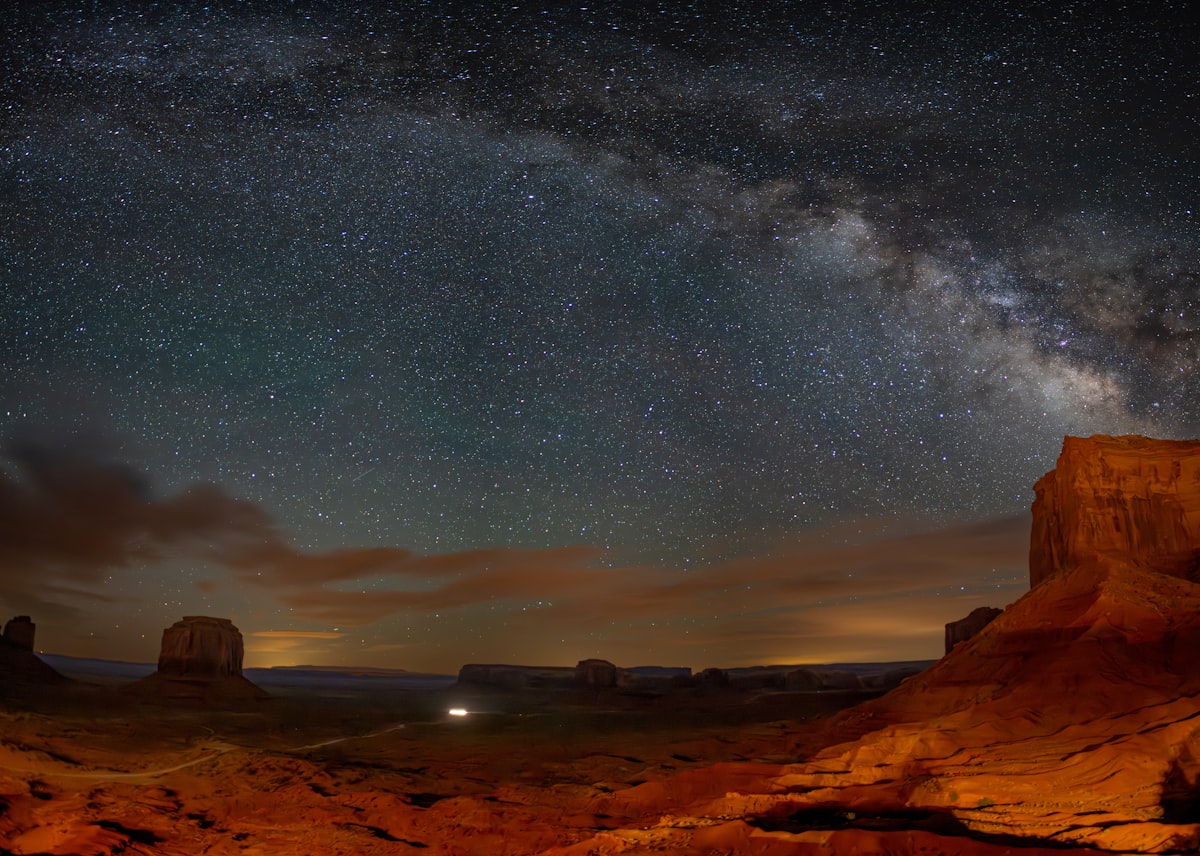
Sedona is an International Dark Sky Community — one of only a few dozen in the United States — which means a town ordinance restricts outdoor lighting specifically to preserve night-sky views. On a moonless night, you can see the Milky Way from your driveway. Here's how to do stargazing properly.
Dark-sky tourism is now a recognised category in the broader Sedona experience catalog at visitsedona.com/things-to-do/100-things-to-do, which catalogs the stargazing tour operators and dark-sky-friendly viewing spots that local astronomers update each season.
The moon-phase rule
Everything depends on the moon. To see the Milky Way you want a new moon, or within 3 days of it. A full moon at altitude is so bright it washes out everything except the brightest stars and planets — beautiful in its own way, but not what most people picture when they say "stargazing." Check the moon phase before you book.
Moon-phase math: targeting new-moon ±5 days
The moon completes a phase cycle every 29.5 days. The five-day window centered on the new moon is your stargazing sweet spot, and within that window the two nights before new moon are usually the absolute best (the moon sets shortly after sunset, leaving the entire night dark). Two practical examples for 2026:
- March 2026 new moon: March 17. Best dark windows: March 15–22, with March 16–18 being the prime nights.
- August 2026 new moon: August 12. Best dark windows: August 10–17, with August 11–13 being prime. This is also peak Milky Way galactic-core season — book early.
The opposite trip-killer: any night within four days of a full moon, you might as well stay indoors for serious stargazing purposes. The constellations and bright planets are still visible, but the Milky Way is gone and faint deep-sky objects (Andromeda Galaxy, the Pleiades cluster) lose their drama.
Best stargazing spots, with parking notes
- Crescent Moon Picnic Site (Red Rock Crossing) — the classic. Cathedral Rock silhouetted against the Milky Way is the iconic Sedona astro-shot. Closes at sunset officially per the gate, but the parking lot is reachable from the adjacent Bald Rock parking area and the walk-in is short.
- Airport Mesa overlook — closest to most rentals, no hiking required, panoramic 270° sky views. Parking lot at the saddle pull-off has roughly 30 spaces; on a new-moon weekend, expect it to be half-full of astrophotographers from 9pm onwards.
- Doe Mountain summit — moderate hike to the top in daylight, sky is unobstructed in every direction. Hike up before sunset, bring layers and a headlamp for the descent.
- Schnebly Hill Road first overlook — drive 1.5 miles up Schnebly to the first pull-off; cars work fine that far, no 4WD needed. The view east into the Mogollon Rim foreground with stars overhead is exceptional.
- Your rental's backyard or rooftop deck — most of our West Sedona properties have skies dark enough that you don't need to drive anywhere. We list dark-sky-friendly properties specifically; ask us at booking.
The Milky Way galactic core season
The galactic core (the bright, photogenic part of the Milky Way) is visible from Sedona's latitude (35°N) roughly March through October, with peak height in June–August. It rises in the southeast and arcs overhead. By November the core is below the horizon and the night sky, while still dark, isn't the same headline experience.
- March: Core rises around 3am in the southeast; pre-dawn viewing only
- April: Core rises around 1am; late-night viewing
- May: Core rises around 11pm; reasonable bedtime viewing
- June: Core visible from 10pm; arcs high overhead by 1am. Prime month.
- July: Core overhead by midnight. Peak month.
- August: Core overhead at 11pm. Peak month, paired with the Perseid meteor shower around August 12.
- September: Core in the southwest by 9pm, setting by midnight
- October: Core low in the southwest at sunset, gone by 10pm
- November–February: Galactic core below horizon. Stargazing still rewarding for constellations, Orion, the Andromeda Galaxy, and winter Milky Way (less dramatic but still visible).
Gear minimums
- Red-light flashlight only — preserves your night vision. A regular phone flashlight will blind you for 20 minutes and ruin everyone else's experience too. Use the red-screen mode on your phone if you don't have a dedicated red headlamp.
- Warm layers — even summer nights drop to the 50s at altitude. Winter nights at the Airport Mesa overlook hit the high 20s.
- Camp chair or blanket — looking up gets uncomfortable fast standing; a reclining chair changes the whole experience
- Binoculars — underrated. A pair of 10x50s reveals Jupiter's moons, lunar craters when the moon is up, and dozens of deep-sky objects invisible to the naked eye
- A star-chart app — Stellarium and SkyView are both excellent; both have dark/red modes
- A thermos of hot drink — non-negotiable for any cold-weather session
- No white flashlights, no white phone screens, no headlights left on in the parking lot — basic dark-sky etiquette that locals enforce socially
For photographers
Wide aperture lens (f/2.8 or faster), tripod, manual mode, 20-second exposure, ISO 3200, manual focus on a bright star. Cathedral Rock from Red Rock Crossing is the iconic composition; allow 30 minutes after astronomical twilight for the sky to be fully dark. For stacking workflows (Sequator, Starry Landscape Stacker), shoot 20 frames of the sky and 5 of the foreground separately, then composite. Most of the iconic "stars over Cathedral" photos you've seen are stacked composites, not single exposures.
Guided tours
Several local operators run telescope tours (Evening Sky Tours, Sedona Stargazing) — worth it if you want a guide to point out constellations and let you look through a 10-inch Dobsonian. Most run 90 minutes and cost around $80–95 per person. Both operators offer private group rates for families.
Meteor shower calendar
Meteor showers are the easiest dark-sky win for first-time stargazers because you don't need to find anything — meteors find you. The big annual showers visible from Sedona, in order of reliability and quantity:
- Perseids (peak August 11–13): The headline shower of the year, often 60–100 meteors per hour at peak. Coincides reliably with the August new-moon window most years. Pack a chair and lie back facing northeast after midnight.
- Geminids (peak December 13–14): The second-biggest shower, with often 50–80 per hour. Cold viewing — bring serious winter gear — but the radiant is high in the sky all night.
- Quadrantids (peak January 3–4): A sharp, short peak (six-hour window) with up to 40 per hour at maximum. Best for committed astronomers.
- Leonids (peak November 17–18): Variable shower; some years 15 per hour, some years storm-level (1,000+ per hour, last in 2001, next predicted around 2034).
- Lyrids (peak April 22): Modest shower (about 18 per hour) but pleasant warm-weather viewing and often coincides with spring break.
Sound and atmosphere etiquette
Dark-sky locations are shared with other observers, many of whom have hauled telescopes and cameras specifically to be there. A few unwritten rules: keep voices low, no music speakers, no unshielded white light of any kind once you arrive, and never run a car engine in the parking lot (the heat shimmer ruins everyone's photographs for a quarter-mile around). If you're driving in late, kill your headlights as soon as the gravel lot is in sight and roll in slowly with parking lights only. The astrophotography community in Sedona is friendly and forgiving of beginners, but they will (politely) explain the rules to you once. Don't make them do it twice.
If you've never seen the Milky Way with your own eyes, plan one Sedona night around the new moon, get away from town lights for an hour, and let your eyes adjust for 20 minutes. The view will reshape how you think about the night sky.
Where to stay in Sedona
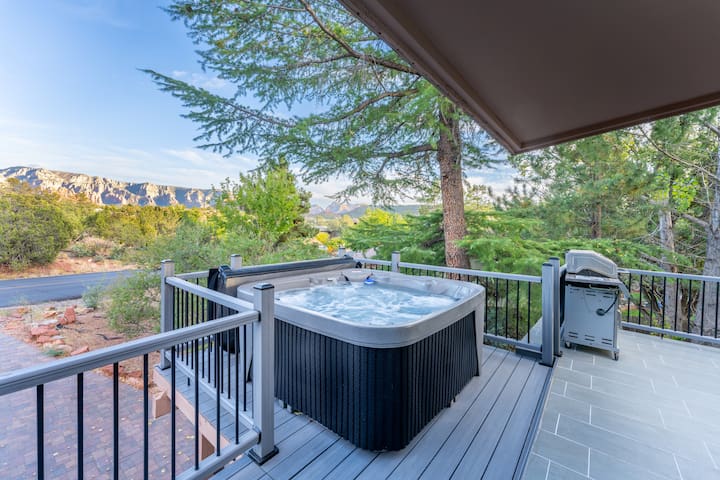
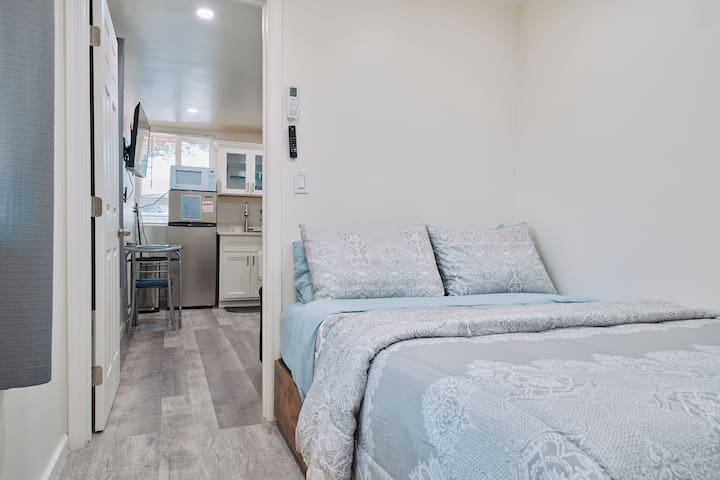
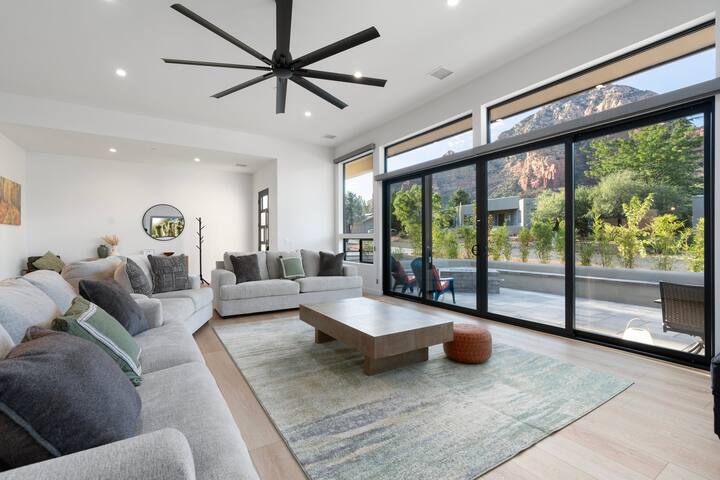
Make a weekend of it — base your trip at one of our luxury Sedona vacation rentals, each with a private hot tub, red-rock views, and room to unwind after the trail.
More in Things to Do
Sedona Babymoon & Couples' Getaway Guide
Jul 5, 2026
Plan your Sedona stay
Browse our hand-picked vacation rentals — book direct and save vs Airbnb / Vrbo.
View Properties