
 Things to Do
Slide Rock State Park: Family Day Guide
By Rupa Chenthil · Published March 30, 2026 · 5 min read
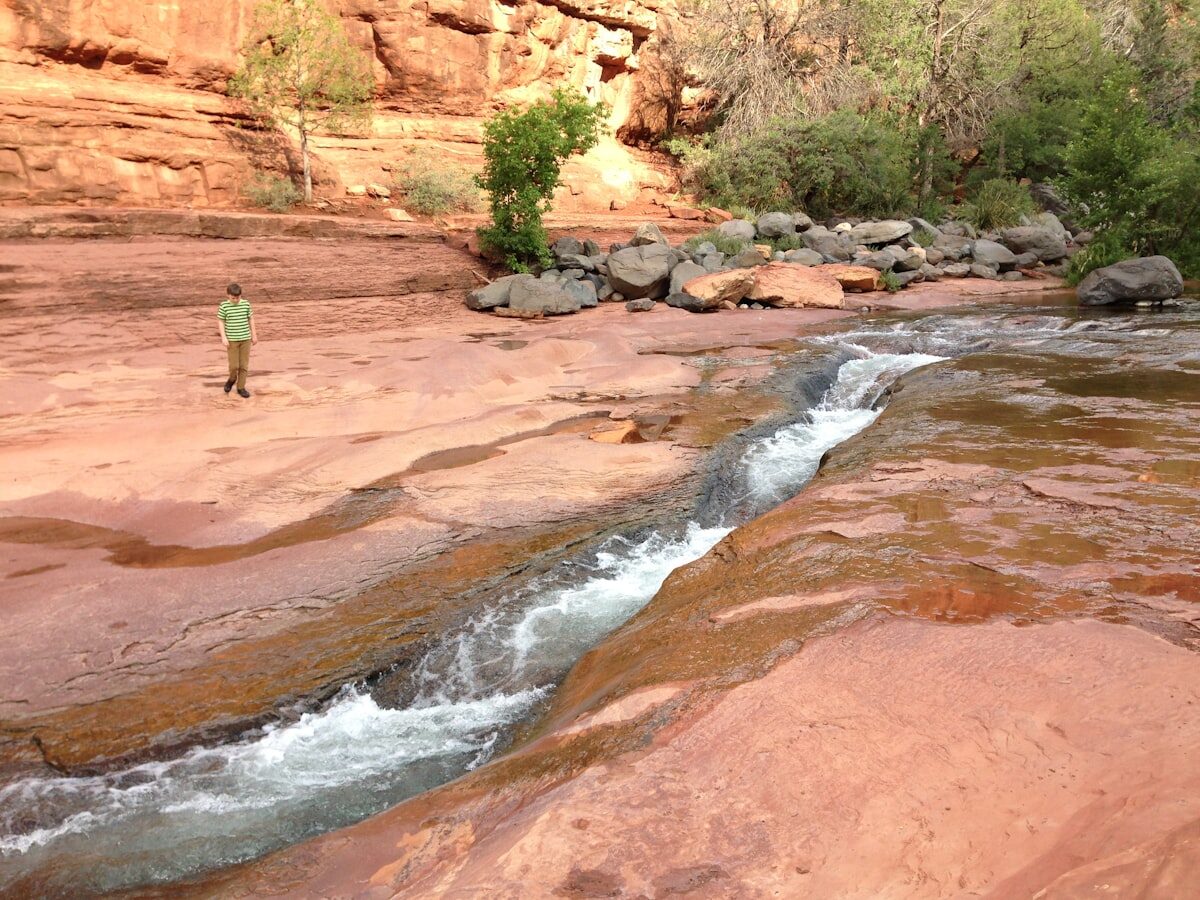
Slide Rock State Park is the natural water park 7 miles north of Sedona, where Oak Creek funnels through a 80-foot slick of red sandstone that families have been sliding down for a hundred years. It's also one of the most crowded summer attractions in Arizona. Here's how to actually enjoy it.
Slide Rock is one of three Arizona State Park properties within an easy drive of Sedona (Red Rock State Park and Dead Horse Ranch round out the trio). The Sedona Chamber's family-fun directory at visitsedona.com/trip-planning/family-fun ranks Slide Rock the top family destination in the region for ages 6–14, and the broader trip-planning hub covers logistics like park entry passes, shuttle alternatives, and which weeks the local schools have field-trip block-outs (yes, that affects crowd levels on weekdays).
What it is
Originally the Pendley Homestead apple orchard, now a state park. The "slide" is a natural rock chute about 80 feet long that you sit-and-slide down into a series of swimming holes. Water temp in summer is mid-60s — refreshing, occasionally shocking. Apple orchards still operate (and you can buy fresh-pressed cider in fall).
Peak-summer crowd-avoidance schedule
The park's published capacity is 320 vehicles, after which the gate closes. In July and August, gate closure typically happens between 10:15am and 11:00am on weekends. Our actual recommendation, hour by hour:
- 7:30am: Arrive at the entrance gate. Park opens at 8:00am sharp. You'll be in line behind maybe 30 cars; everyone gets in.
- 8:00–10:00am: Park is pleasant, slide is uncrowded, water is genuinely cold. Best photos of the day.
- 10:00am–1:00pm: Capacity hits. Slide gets shoulder-to-shoulder. Photos become impossible. Most experienced families leave by 11:00am.
- 1:00–3:00pm: Peak crowd. The picnic area is full, the slide queue is twenty-deep, parking lot turns into a queue of cars circling looking for spaces. Avoid.
- 3:00–5:00pm: Second wave of openings as morning families leave. The crowd thins. If you arrive at 3:30pm, you'll typically get in within ten minutes.
- 5:00–6:00pm: Quiet again, water is warmest of the day, light is golden. Hidden good window.
Water-quality dates (when bacteria closures hit historically)
Oak Creek has historically been closed to swimming at Slide Rock for bacterial counts (E. coli) once or twice per season, almost always after monsoon runoff events in July and August. The park does not always announce closures in advance; they post signs at the gate. If you see a "water contact prohibited" sign, the slide is closed and you've driven seven miles for nothing — call ahead on monsoon weeks (928-282-3034) or check the park's social media before leaving Sedona.
What shoes survive the chute
The slide is hard on footwear. Old sneakers shred in two trips down. Hiking boots are dangerous (heavy, slow you, can twist an ankle). The right answer is closed-toe water shoes with a thin sticky-rubber sole — Astral or Five Ten brands hold up the best in our experience. Cheap Walmart water shoes are fine for a single trip but rarely survive two slides.
Picnic-vs-eat-out math
The park has decent picnic tables and BBQ grills, all first-come. For a family of four, packing a cooler with sandwiches, fruit, and cold drinks costs maybe $30 and gives you flexibility to stay or leave on your schedule. Eating out at Indian Gardens Café (on the way back) costs $80–100 for four and adds 45 minutes to your day. For a family with young kids who'll melt down by 1pm, the packed lunch is the right call. For a couple or older-kid family making a leisurely day of it, Indian Gardens on the way home is a treat.
When to go
- Best: weekday mornings in June or September, arrive by 8:30am
- Avoid: Saturdays and Sundays in July — the park hits capacity and closes by 10am, sometimes for the entire day
- Surprise pick: late October. Foliage is peaking, water is too cold to swim, but the park is empty, the apple orchards are beautiful, and the fresh cider press is running
- Special case: spring break weeks (mid-March through early April) — the park is unexpectedly busy from college students. Skip it.
Parking strategy
The park has one parking lot. When it fills, they close the gate and turn cars around. Strategies:
- Arrive before 9am on weekends, before 10am on weekdays
- If you're turned away, check back at 3pm — there's a second wave of openings as morning visitors leave
- $30 entrance fee per vehicle in peak season (cash or card)
- Annual State Park Pass is $200 and pays back in 7 visits across the Arizona system
Alternate cool-off plans if Slide Rock is closed
If you arrive and the gate is closed, your immediate alternatives are: West Fork Trail (3 miles further up the canyon, ankle-deep wading in a beautiful shaded creek), Grasshopper Point (5 miles closer to Sedona, smaller swimming holes, smaller crowds, $10 day-use fee), or Crescent Moon Picnic Site at Red Rock Crossing (10 minutes south, calm wading pool, lawn for picnicking, view of Cathedral Rock). None of them replicate the slide, but all of them solve the "we drove here to get wet" problem.
What to bring
- Old swimsuit or shorts — the rock will shred a nice one. Seriously.
- Water shoes — algae makes the rocks slippery; barefoot is genuinely dangerous
- Towels for everyone, and one extra
- A cooler — picnic tables are first-come, the BBQ area is great
- Sunscreen and a hat — most of the slide is in full sun
- A cushion or sit pad for the parents who'd rather watch than slide
- Waterproof phone case if you want to photograph the slide from a swimmer's perspective
What to know about safety
Don't dive. The pools are shallow and full of rocks. Don't slide head-first. Don't try the slide after a rainstorm — flash floods are real and Oak Creek rises fast. Lifeguards are not posted; supervise kids actively.
Combine with
West Fork Trail is 3 miles further up the canyon — perfect afternoon hike to cool down after the morning at the slide. Indian Gardens Café is on the way back to Sedona for an early dinner.
What to know about the apple orchards
The historic Pendley Homestead orchards are still actively worked by the park staff and a partnership with Slide Rock Apple Company. The orchard tour, included with park admission, walks you through the heritage apple varieties (Arkansas Black, Stayman Winesap, Rome Beauty, Yellow Newtown — several rare varieties barely grown anywhere else in the Southwest). Late September through October is the picking season, with fresh-pressed cider available from the press house most weekends. The cider sells out by early afternoon on busy days; arrive in the morning if you want a jug to take home.
The historical context
Frank Pendley homesteaded this stretch of Oak Creek Canyon in 1907 and developed the irrigation system that still feeds the orchards today. The state purchased the property in 1985 and opened it as a park in 1987. The original homestead cabin and apple-packing shed are preserved on the grounds and worth a five-minute detour from the slide area; the ranger-led talks (offered twice daily in summer) cover the early-20th-century homesteading history in a surprisingly engaging way. If you've got kids 8-and-up, the talks earn an hour of attention easily.
Slide Rock is the rare attraction that's actually as fun as it looks in the photos. Hit it early, leave by 1pm, and you'll have a great half-day with the rest of the afternoon free.
Where to stay in Sedona
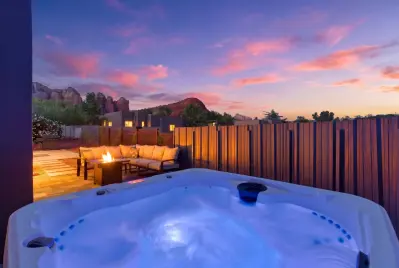
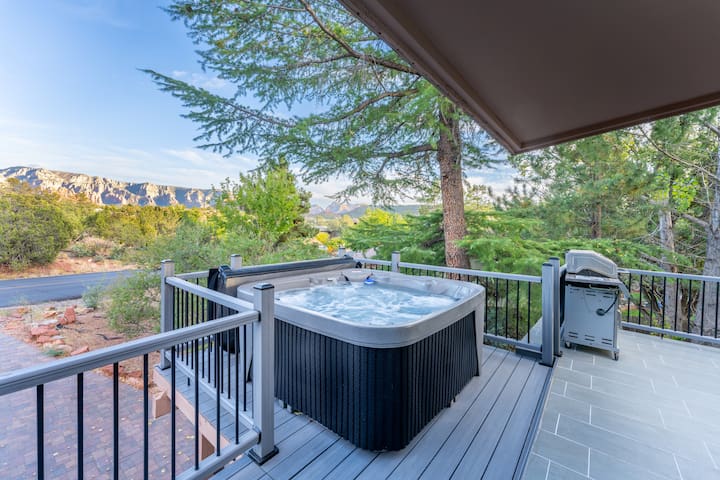
Make a weekend of it — base your trip at one of our luxury Sedona vacation rentals, each with a private hot tub, red-rock views, and room to unwind after the trail.
More in Things to Do
Sedona Babymoon & Couples' Getaway Guide
Jul 5, 2026
Plan your Sedona stay
Browse our hand-picked vacation rentals — book direct and save vs Airbnb / Vrbo.
View Properties