
 Vortex & Wellness
Cathedral Rock Vortex: A First-Timer's Guide
By Rupa Chenthil · Published May 12, 2026 · 5 min read
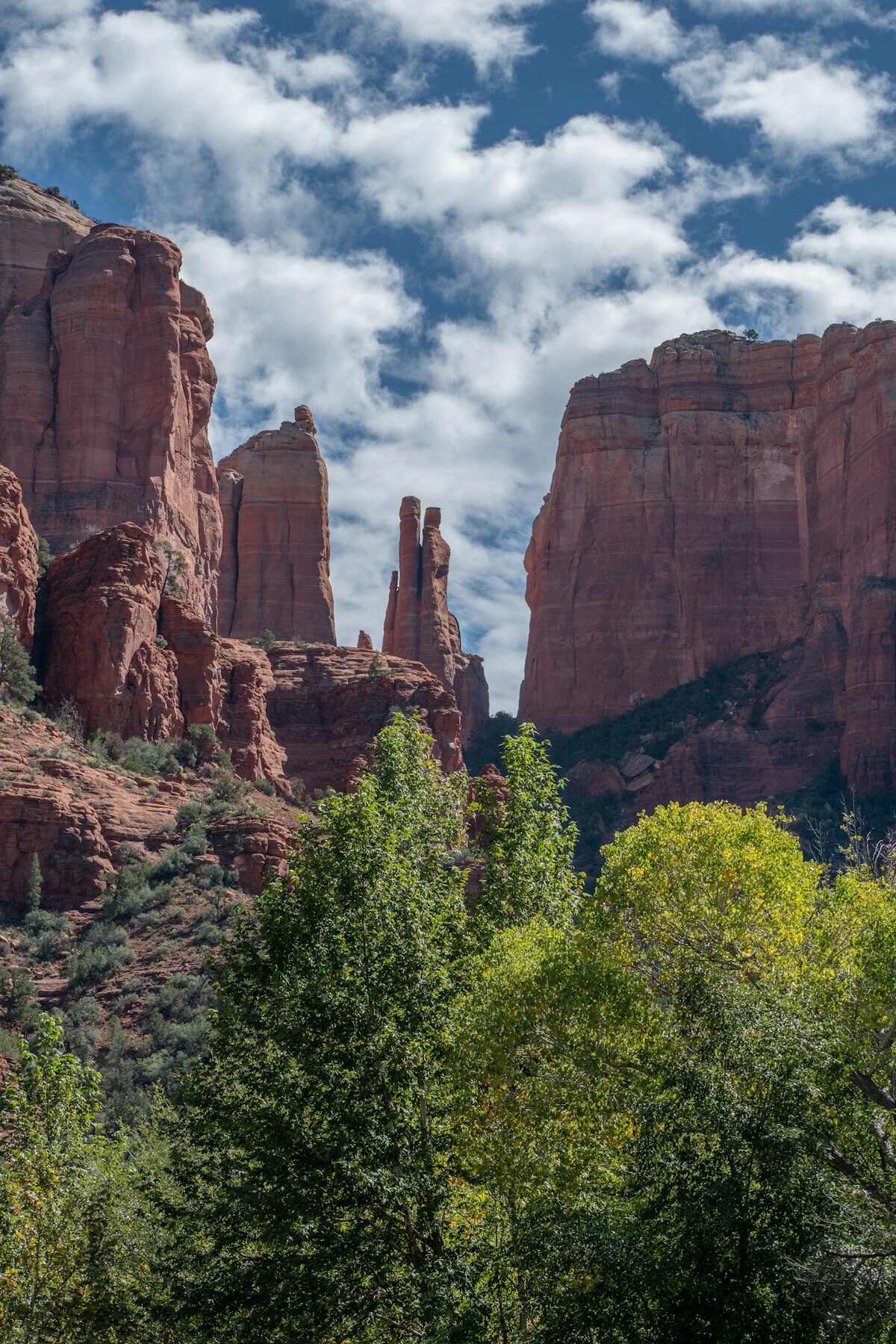
Cathedral Rock is one of Sedona's four major vortex sites and probably the most photographed formation in the state. Here's what to actually expect on your first visit — without the woo and without the dismissiveness. We've sent hundreds of guests up this trail and the experience splits cleanly: people who came expecting an energy revelation often don't get one, and people who came skeptical for the view frequently leave moved by something they can't quite name. Both reactions are valid.
For the official Sedona Chamber's framing of the vortex tradition (including the four-site map and the gentle, non-evangelical history), the canonical reference is visitsedona.com/things-to-do/spirtual-wellness — and yes, the URL really is spelled "spirtual" on the visitsedona side; we are not introducing the typo here.
The climb in detail
The trail is short (1.2 miles round trip) but steep and exposed, with two genuine scramble sections where you'll use your hands. It climbs roughly 740 feet to a saddle between two of the cathedral's spires. Most people take 45–75 minutes up. Trail shoes with real grip are non-negotiable — the sandstone gets glass-slick when dusty.
The route breaks down into three distinct sections. The first quarter-mile is a sandy, easy ramp that lulls you into thinking the whole thing is gentle; it isn't. From there, the trail hits a long slickrock staircase carved into the sandstone with cairns marking the way — this is where most knees start complaining. The final 200 vertical feet is the famous "chute," a near-vertical crack where you'll use hand-and-foot scrambling. There are well-worn footholds and the rock is grippy when dry, but in wet conditions or after a dusting of snow, this section becomes genuinely dangerous and rangers occasionally close it.
The saddle itself is a flat, wind-swept platform roughly the size of a tennis court, with a stunted juniper or two and unbelievable views in every direction. Most people stop here and call it the summit. If you want the true top of one of the spires, there's a faint scramble route to the right that adds another fifteen minutes and a couple of exposed moves — only attempt it if you're a comfortable scrambler and the rock is dry.
What people actually report feeling
We've informally polled returning guests for years. Roughly a third describe a tangible physical sensation at the saddle — most often a tingling in the hands, a warmth in the chest, or a feeling of being "lighter." Another third describe a profound emotional release, sometimes unexpectedly tearful. The final third describe a beautiful view and nothing more, and tend to be the most amused by the people sitting cross-legged on the rock.
Cathedral Rock is classified as a "feminine" or "inflow" vortex in Sedona's vortex tradition — meant to encourage reflection, calm, and emotional release rather than the high-energy charge of Airport Mesa or Bell Rock. Whether you believe in subtle energies or not, the saddle is genuinely an extraordinary place to sit: 360° of red rock, wind moving through the spires, often a raven or two overhead, and a notable absence of distant traffic noise.
Our advice: don't show up expecting anything in particular. The people who feel the most are usually the ones who simply sat down, closed their eyes for ten minutes, and breathed.
Best time of day / time of year
- Sunrise — the move. Least crowded, coolest, and the eastern light hits the spires from below. Aim to start hiking 30 minutes before published sunrise; you'll reach the saddle as the rock turns orange.
- Sunset — most crowded but unforgettable. Pack a headlamp for the descent; the chute in the dark is genuinely scary without one.
- Midday in winter — surprisingly good. Cool enough to climb hard, sun low enough to flatter the photos, and the parking lot is half-empty.
- Avoid: 10am–3pm May through September. The exposed rock hits 130°F surface temperature, there is zero shade, and there is no water at the trailhead. Heat illness rescues happen here every summer.
By season, March and October are the gold-standard months — cool air, dry rock, manageable crowds at sunrise. July and August are the worst combination of heat and monsoon storm risk; don't even consider this hike with thunderstorms in the forecast (lightning at the saddle is a real and recurring hazard).
Etiquette around other vortex visitors
The saddle is small and shared. There are usually several people sitting in meditation, sometimes whole guided groups led by local practitioners. A few unwritten rules that locals appreciate:
- Lower your voice within fifty feet of the saddle. The wind already makes hearing hard; you don't need to add.
- Don't walk between someone and the view they're clearly contemplating. Step around them.
- Drones are explicitly prohibited in this wilderness area. Don't be that person.
- If you want a photo of someone meditating, ask first. Most will say yes; nobody appreciates the assumption.
- Music speakers carry across the saddle for hundreds of feet. Use headphones or leave the music at the car.
Where to park (and the overflow reality)
The Back O' Beyond trailhead lot has roughly 20 spaces and fills by 7am on weekends from March through November. Overflow parking is at the Yavapai Vista lot off Highway 179, with a paid shuttle ($3 round trip) running every 20 minutes from 8am to 5pm during peak season. Red Rock Pass required at the Back O' Beyond lot; the shuttle includes access.
On weekends in spring and fall, our standing advice to guests is to skip Back O' Beyond entirely and just take the shuttle. The Back O' Beyond access road is narrow and one-way during peak hours, and rangers will turn you around when the lot fills. Park once at Yavapai, take the shuttle both ways, and don't think about it again.
What to bring
- 1.5L water per person — the saddle has no shade and you will dehydrate fast at the top
- Real hiking shoes with grippy lugged soles; running shoes will slide on the slickrock
- A small towel or thin sit-pad if you plan to meditate at the top — the rock is hot, cold, or sharp depending on season
- Headlamp if you're descending near dark; the chute is unforgiving in low light
- Phone fully charged — for both photos and the emergency call you hopefully never need
- A light layer for the saddle wind, which can be ten degrees cooler than the trailhead
If you only have time for one Sedona hike
This is the one. Cathedral Rock packs more visual punch per mile than anything else in the area, and the saddle experience — vortex or no vortex — is something guests still talk about months after they've left. For more guided trail recommendations across the full Coconino network, the curated visitsedona.com hiking catalog ranks routes by difficulty and views so you can compare Cathedral against the alternatives before committing your knees.
Cathedral Rock is the kind of hike where the destination earns the climb. Take your time at the saddle — most people rush down after a quick photo and miss the actual reason to be there. Block out a full two hours from car to car: forty minutes up, forty minutes to sit and look around without your phone in your hand, forty minutes down with deliberate footing. That single block of time is how guests describe the most memorable hour of their Sedona trip, year after year, in the post-stay messages we collect.
Where to stay in Sedona
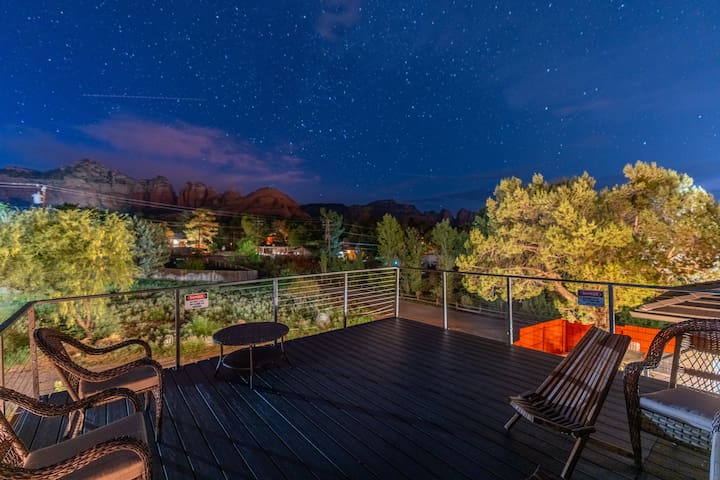
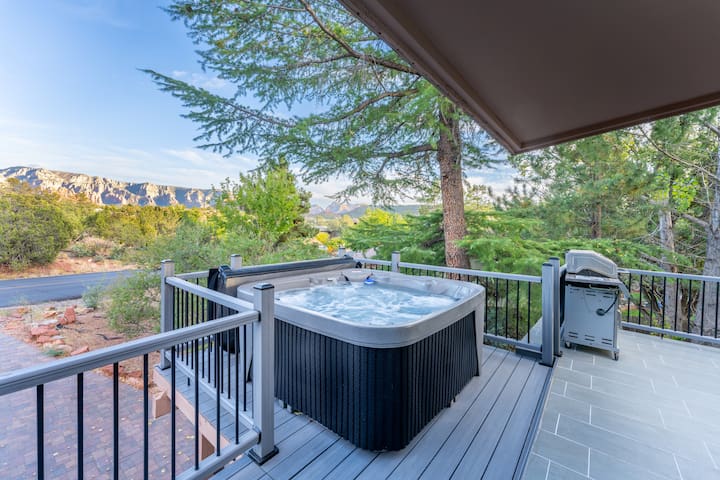
Make a weekend of it — base your trip at one of our luxury Sedona vacation rentals, each with a private hot tub, red-rock views, and room to unwind after the trail.
Plan your Sedona stay
Browse our hand-picked vacation rentals — book direct and save vs Airbnb / Vrbo.
View Properties