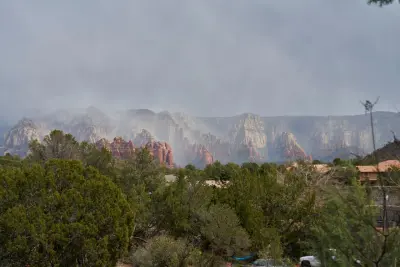

Sedona in Winter — When the Red Rocks Dust White
Winter is Sedona's most under-appreciated season. The crowds thin by half, the air goes clear and cold, and the red rocks shift to a deeper rust against bare-branch sycamores along Oak Creek. A handful of mornings each winter — usually two or three — the high pressure breaks and a quiet storm dusts the rocks with snow at 4,500 feet, and for a few hours Sedona becomes one of the most photographed landscapes in the country. Plan for it loosely, dress for it properly, and you'll catch a side of the canyon most visitors never see.
What to expect
Sedona winters are mild by mountain-town standards and dramatic by desert-town standards. Daytime highs from December through February run 55–62°F under sun, dropping fast to 28–35°F overnight. The town averages roughly 9 inches of snow across the whole season — most of it from two or three discrete storms — and individual snowfalls usually melt off south-facing slickrock within 24 hours. North-facing canyons (Boynton, West Fork, the back of Bell Rock) hold snow several days longer.
The red-rock dusting is rare but magical: when a winter storm drops snow at 4,500 feet, the white sits in the cracks and ledges of the sandstone and the rocks photograph in a way they never do the rest of the year. Cathedral Rock, Bell Rock, and the Chapel area become entirely different landscapes for the morning after. If you check the National Weather Service Flagstaff forecast and see a storm pushing south overnight, set an alarm — sunrise on a fresh-snow morning is the trip of a lifetime.
Crowds drop by roughly half compared to spring and fall. Restaurant reservations open up. Trails like Cathedral Rock and Devil\'s Bridge that hold a queue in October feel almost private on a clear January Tuesday. Property rates are at their annual low. The trade-off is fewer daylight hours (sunset is 5:25 PM in December) and the occasional storm day where the high country roads close.
Best hikes for the season
Winter is the right time to take on the hikes you avoid in summer heat — south-facing slickrock that bakes at 130°F in July is comfortable and gorgeous in 55°F sun. Three picks:
Cathedral Rock Trail — the marquee winter climb. Sunrise sessions are exquisite (red rocks lit gold against cold blue sky), parking at Back O\' Beyond is easy on weekdays, and the upper saddle on a clear winter morning is one of the great quiet moments in the Southwest. Skip after heavy snow — the chute holds ice that turns the scramble dangerous.
West Fork of Oak Creek — flat creek-crossing trail through a narrow slot canyon. Without the bigtooth maple colour the canyon goes silver-grey, but bare branches against the canyon walls have their own beauty. Bring waterproof shoes — winter creek crossings are cold.
Bell Rock Pathway — the easy 3.6-mile flat loop is comfortable any winter day. South-facing aprons of Bell Rock itself are pleasant for sit-and-soak-the-sun lunch stops; bring a thermos.
Snow-day caution: cairned slickrock routes become genuinely hard to follow under fresh snow. Stick to well-trodden trails when accumulation is more than an inch, and turn around if you lose the route.
Day trips to Flagstaff & Snowbowl for serious snow
If you want to actually be in snow rather than glance at a dusting on the rocks, the answer is a 45-minute drive up Oak Creek Canyon on AZ-89A to Flagstaff (elevation 7,000 ft, reliable December–March snowpack) and another 15 minutes to Arizona Snowbowl on the San Francisco Peaks (base 9,200 ft, top 11,500 ft). Snowbowl runs lift-served downhill skiing and snowboarding from mid-November into April most years; ticket sales are timed-entry — book online before you drive up.
For non-skiers, the Snowbowl scenic chairlift runs through the winter season and gives access to the upper peaks for snowplay, sledding, and photography without skis. Flagstaff itself has groomed Nordic skiing at the Arizona Nordic Village and sledding at Wing Mountain Snowplay Area on US-180 (rental sleds, restrooms, a fee per car).
Plan for the drive carefully. Oak Creek Canyon\'s switchbacks (the climb out of Sedona on the way north) ice up after winter storms — the road may close briefly during active snowfall. Check ADOT\'s current road conditions before leaving Sedona on storm days. The alternate route via I-17 north and US-89A west is slower but stays open more reliably. Either way: drive a vehicle with all-season or dedicated snow tires; carry chains; leave Sedona by 8 AM to be at Snowbowl as the lifts open and back down before any afternoon weather sets in.
Booking + packing tips
Property rates in Sedona bottom out in January (excluding the New Year holiday week). Mid-week winter stays are often 30–40% below shoulder-season pricing — the right window for a quiet long weekend.
Pack for two temperature ranges. A typical winter day is layered: 30°F at 7 AM at the trailhead, 60°F at 1 PM in the sun, 38°F by 5 PM. Bring a wool base layer, a midweight fleece, a wind/rain shell, a beanie, gloves, sunglasses, and high-SPF sunscreen (winter sun at 4,500 ft will burn your face). Trail shoes with real tread for snow-dusted slickrock — flat-soled sneakers are a sliding hazard on cold wet rock. A small day-pack thermos of coffee is the single best winter trail accessory. If you\'re extending to Flagstaff, throw a heavy jacket, waterproof pants, and snow gloves in the car as a separate kit.
Drive a vehicle you trust on a cold morning. Sedona itself rarely needs four-wheel drive, but Oak Creek Canyon switchbacks and any drive toward Flagstaff after a storm absolutely benefit from it. If you\'ve rented a car, ask about all-weather tires when picking up at PHX.
Photographer\'s tip
Track the National Weather Service Flagstaff forecast for any storm pushing south the night before — that\'s your shot. Be at the Chapel of the Holy Cross overlook, or the Red Rock Crossing on Verde Valley School Road, by first light. The combination of fresh snow on red rock and the warm side-light of low winter sun is a window that lasts about 90 minutes before the snow starts melting off the south faces. Bring a polarising filter (cuts glare off snow), a long lens for compressed shots of Cathedral Rock from across the creek, and a microfibre cloth — cold lenses fog fast when you breathe near them.
Even on snowless winter mornings, the light is the prize. The sun\'s low arc through December and January side-lights the rocks for most of the day rather than the harsh top-down lighting of June; texture and colour both come through better. The hour after sunrise and the hour before sunset are the only times of day worth photographing in summer; in winter, almost the whole day works.
Stay nearby
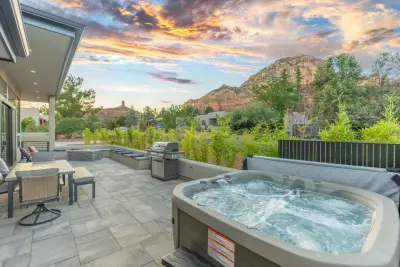
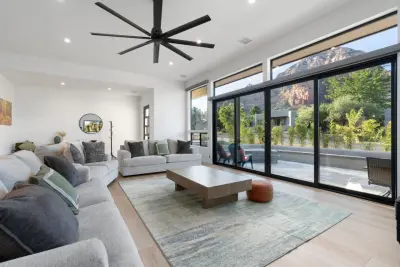
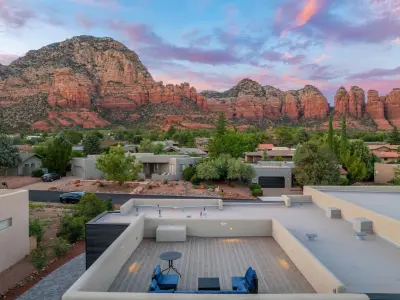
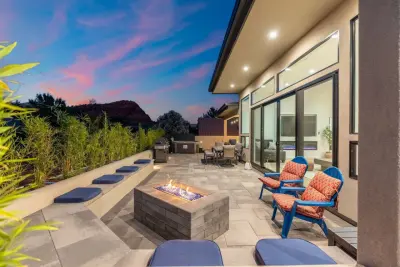
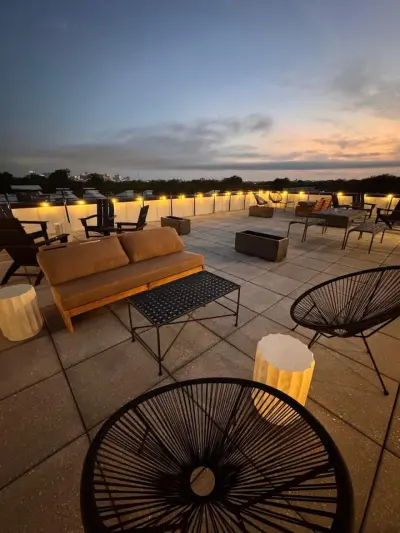
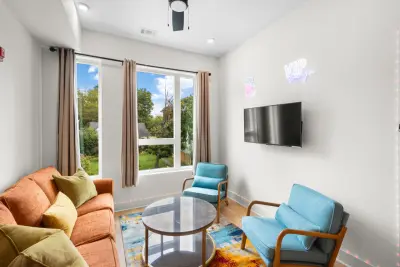
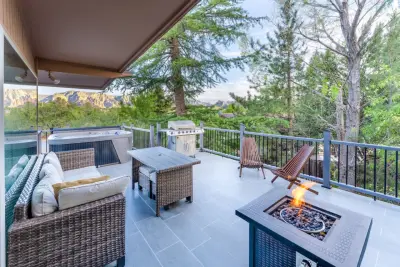
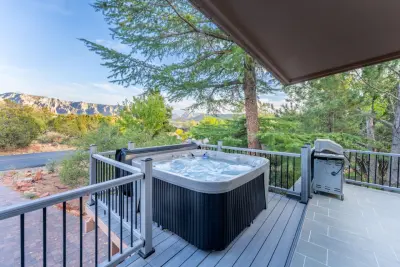
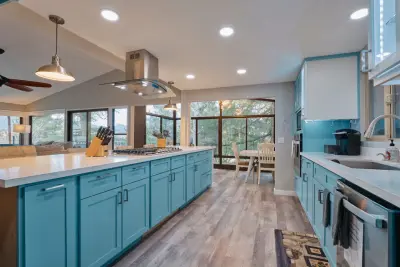
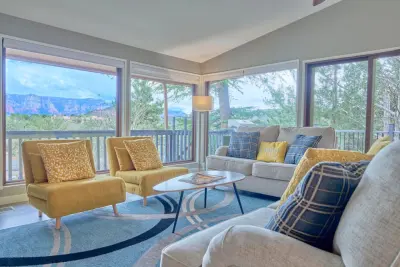
Winter is the best season to settle into a Sedona rental — quiet evenings around a fire pit, hot tub under a black-and-stars sky, cool-but-not-cold patios at every meal. Browse our full Sedona vacation rentals collection for properties with hot tubs and indoor fireplaces, and pick mid-week dates in January or early February for the lowest rates of the year. For Visit Sedona\'s official winter trip overview and current road conditions, see their winter guide.