Fall Foliage in Oak Creek Canyon: The Two-Week Window
Most people don't expect autumn colour in Arizona — and then they drive AZ-89A north out of Sedona in late October. Oak Creek Canyon turns into a 14-mile corridor of sycamores, cottonwoods, and bigtooth maples lit up against the red rock walls. The window is narrow, the weekends are busy, and the photography is some of the best in the state.
When to come
Oak Creek Canyon\'s peak fall foliage window is narrow and surprisingly reliable: October 20 through November 10 in most years, with peak colour usually landing within a couple of days of November 1. The window has shifted later by roughly a week over the last fifteen years as average autumn temperatures have warmed; in 2024 peak hit November 5, in 2023 it hit October 30. If you are booking a trip specifically for fall colour, target the last weekend of October or the first weekend of November — you will catch peak in three years out of four.
Colour starts at the top of the canyon (5,500 ft, near the Oak Creek Vista) and moves downstream as the season progresses, reaching the canyon mouth (4,300 ft, just north of Sedona) about ten days later. If you arrive mid-October and the upper canyon looks late-summer green, drive to the top — the vista there is often two weeks ahead of the canyon floor.
What turns colour
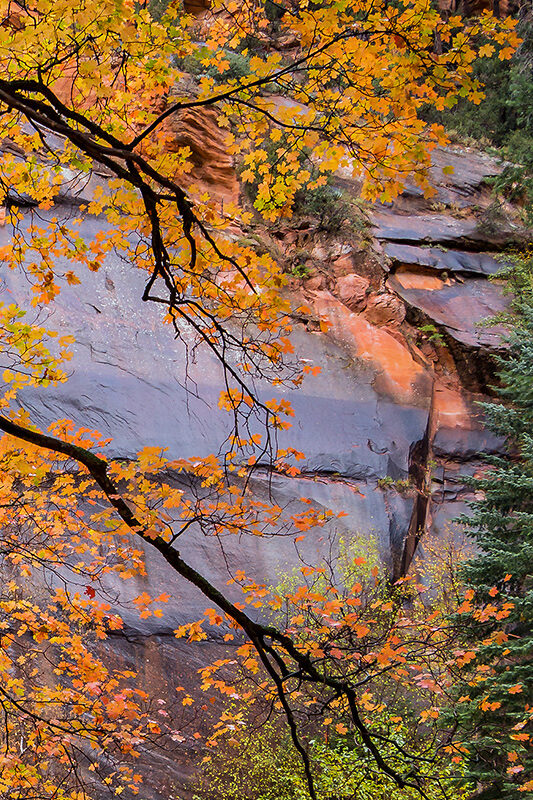
Oak Creek Canyon\'s autumn palette comes from three trees in particular: Arizona sycamore (yellow to russet, the largest of the three, often a full 50 feet tall along the creek), Fremont cottonwood (bright gold, often the first to turn), and the showpiece, bigtooth maple (deep crimson and orange, smaller and more scattered, concentrated in the side canyons). The maples are the photographic prize; you find the biggest concentration along the West Fork of Oak Creek.
The scenic drive: AZ-89A through the canyon
The drive is the experience for most visitors. Take AZ-89A north out of Uptown Sedona; you will be in the canyon within five minutes. The road follows Oak Creek for 14 miles up to the Oak Creek Vista, climbing 1,200 feet through a series of switchbacks. The whole drive takes 35 minutes one-way without stopping; with the pull-offs below, plan two to three hours.
Best pull-offs, north to south:
- Oak Creek Vista (mile 14) — the overlook at the top of the canyon, paved parking lot, restrooms, Native American jewellery vendors. The view back down the canyon is the iconic shot.
- Pumphouse Wash (mile 12) — small pull-off on the west side; short scramble to the wash gives a quiet vantage with no crowds.
- Cave Springs (mile 9) — campground entrance (closed in winter but the pull-off remains usable); good cottonwoods.
- Encinoso Picnic Area (mile 7) — proper paved parking, picnic tables, easy creek access. Our pick for the lunch stop.
- Slide Rock State Park (mile 7) — entry fee ($20 off-season), but the apple orchard area has spectacular fall colour and there is more parking than the smaller pull-offs.
- Banjo Bill Picnic Area (mile 5) — small, often missed, good for a quiet photo stop.
- Indian Gardens (mile 4) — has the area\'s best café for a coffee stop; pull off and walk to the creek behind the café for a striking colour vantage.
West Fork Trail — the iconic fall hike
If you do one fall hike, do West Fork of Oak Creek. The trailhead lives at mile 10 on AZ-89A; parking is $11 per vehicle (cash or Red Rock Pass not accepted at this specific lot — bring eleven dollars exact change or a card for the iron ranger). The trail is 3.4 miles round-trip on flat terrain, crossing the creek thirteen times (the crossings are stone-hops in normal water levels — there are no bridges). Wear shoes that can get a little wet; consider neoprene socks in November.
The trail enters a narrow slot canyon with vertical sandstone walls 200 feet high. Bigtooth maples cluster along the creek and in the side drainages — at peak the canyon walls glow orange and red where the sun hits the leaves against the rock. This is the most photographed hike in the area in autumn and the photography is genuinely as good as the reputation. Allow three hours including stops.
Crowd warning: West Fork on a peak October weekend gets two thousand visitors a day. The parking lot is full by 7:30 AM Saturday; cars are turned away by 9 AM. Either commit to being at the trailhead by 7 AM, do it on a Tuesday or Wednesday, or substitute the less-photographed but excellent Sterling Pass Trail (5 miles round-trip, more elevation, fewer crowds, the maples are concentrated in the upper basin).
Weekday vs. weekend strategy
Honestly: come on a weekday if you possibly can. Monday through Thursday in late October feels like a different canyon than Friday through Sunday — the parking is easy, the pull-offs are empty, the West Fork trail is contemplative instead of conga-line. If you must come on a weekend, our recipe is: West Fork by 7 AM (be on the trail with the first light), down the canyon by 11 AM, lunch at Indian Gardens, scenic-drive the pull-offs in the afternoon when the harsh midday sun has softened to mid-afternoon side-light. Avoid driving the canyon between 2 PM and 4 PM on a Saturday — the traffic queue back to Sedona can take an hour.
What to wear
Layers. Late October mornings in the canyon are 30–40°F in the shade; by 1 PM in the sun on the canyon floor it is 70°F. Standard rig: long pants, a t-shirt, a midweight fleece, a wind shell, a beanie for the first hour, sunglasses, sunscreen on the face, sturdy trail shoes. Add gloves if you are sensitive to cold or if you are hiking the upper canyon. Bring a thermos of coffee or tea — the canyon-floor picnic stops are made for it.
Where to stop for lunch
Indian Gardens Cafe (mile 4) — the local favourite for breakfast burritos, sandwiches, and excellent coffee. Small patio, often a 15-minute wait at noon. Cash or card.
Garland\'s Oak Creek Lodge (mile 8) — historic property that opens its dining room to non-guests for lunch by reservation; the setting under the cottonwoods is unmatched. Phone ahead.
Packed picnic at Encinoso (mile 7) — our preferred move on a weekend. Pick up sandwiches from Wildflower Bread Company in West Sedona on the way out, eat at the creek-side picnic tables under the colour.
Photography tips
The light in the canyon is best in the first 90 minutes after sunrise and the last 90 minutes before sunset — the low angle picks up the leaves against the rock. Midday is harsh and the leaves go flat. A polarising filter is essential — it cuts the glare off the creek and saturates the colours. The 24–70mm range covers most compositions; bring a 70–200mm for the long-canyon compressed shots from the Oak Creek Vista.
If you miss the peak
Late November and early December have their own beauty in Oak Creek Canyon — sycamores hold their leaves through the first frost, cottonwoods carpet the creek bed in gold, and the crowds vanish. December weekdays can feel like you have the canyon to yourself. The trade-off is the deciduous colour is past peak; the dominant colour is then the gold of dropped leaves rather than the active fire on the trees.
For the official Forest Service status updates on Oak Creek Canyon trailheads and seasonal closures, the current authority is Visit Sedona\'s fall guide — they sync to the Coconino National Forest ranger reports and post the current parking-lot status during peak season.
Two weeks. Plan for it; get there early; bring layers; come home with a card full of orange-against-red photographs and a year-long memory of one of the great unsung autumn corridors in the American West.